
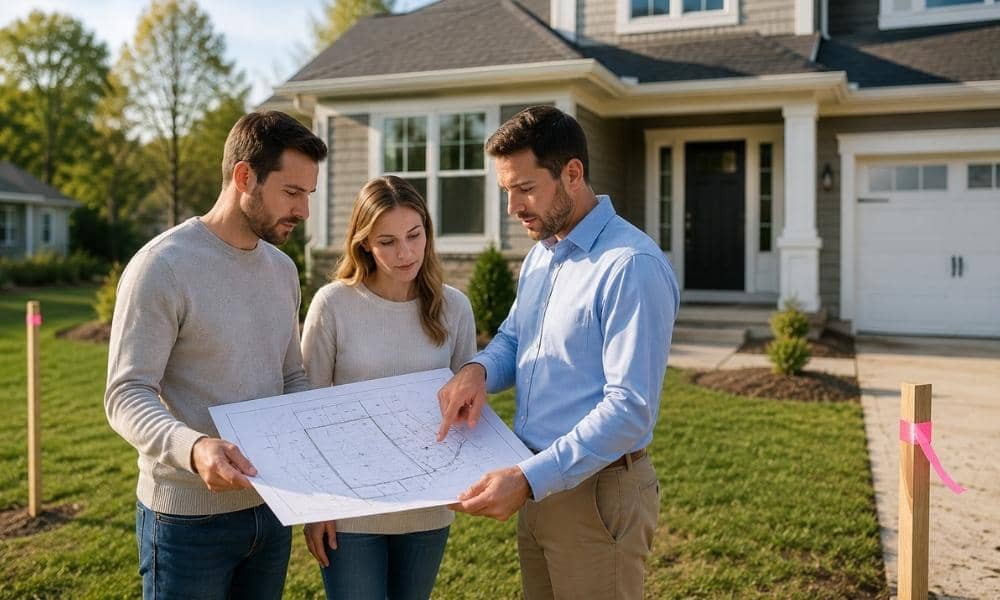
Many buyers assume that if a survey already exists for a property, it is good enough to use at closing. Sometimes that is true. But in Iowa, whether an older survey is still reliable depends on several things. What has changed on the property, what the lender or title company requires, and how much risk you are willing to accept all factor into that decision. Getting this wrong can lead to problems that show up long after the deal is done.
When an Existing Survey May No Longer Reflect the Property
A survey captures conditions as they existed on a specific date. The moment something changes on the property or around it, the survey starts to fall behind.
Here are common changes that can make an older survey less reliable:
- New fences or structures. A fence installed after the survey may or may not sit on the true boundary. A detached garage or shed added since the survey was done may sit closer to a property line than records show.
- Additions to the main building. Any expansion of the home that occurred after the survey was completed will not appear on the existing document.
- Utility installations. New utility lines, easements, or service connections recorded after the survey may affect how the property can be used.
- Road improvements. If the city or county has widened a road or adjusted a right-of-way near the property, the boundary relationship to the street may have changed.
- Neighboring property changes. A new structure, driveway, or fence on an adjacent lot may encroach on the property you are buying without either party being aware of it.
Even small changes can affect how confident you can be in an older survey. If you cannot confirm that nothing has changed since the survey was done, treating it as current carries risk.
How Real Estate Transactions Can Influence Survey Requirements
Not every property purchase is treated the same way. The type of property and the nature of the transaction can change what survey documentation is expected.
Vacant land and agricultural acreage. Rural and agricultural parcels often have complex boundary histories. Fence lines, drainage tile systems, and road easements can all affect boundaries. An older survey on a farm or vacant parcel may predate significant changes to the land or surrounding infrastructure.
Residential homes. For a typical home purchase, lenders and title companies may accept an existing survey if it is reasonably recent and no visible changes have occurred. But that acceptance is not guaranteed. Confirm with your lender and title company before assuming the existing survey will satisfy their requirements.
Inherited property. Inherited parcels sometimes come with surveys that are decades old. These documents may reference landmarks or monuments that no longer exist. Relying on them without professional review adds uncertainty to the transaction.
Commercial parcels. Commercial purchases typically involve more detailed documentation requirements. An older survey may not meet the level of detail expected by lenders, title companies, or future tenants.
Understanding the specific requirements of your transaction type is more useful than assuming one standard applies to every purchase.
Questions Buyers Should Ask Before Relying on an Older Survey
Before you decide to use an existing survey, get answers to these questions.
When was the survey completed? A survey from two years ago on an unchanged rural parcel may still be reliable. A survey from fifteen years ago on a property that has seen multiple improvements may not be.
Have property improvements been made since the survey was done? Ask the seller directly. Look at the property yourself. Compare what you see on the ground to what the survey shows. If things do not match, that is a signal to look closer.
Were easements added or modified after the survey date? Check with the title company. Easements recorded after the survey will not appear on the document. If new utility or access easements exist, they need to be part of your review.
Does the legal description still match current records? If any parcel splits, lot line adjustments, or deed changes have occurred since the survey was prepared, the legal description in the survey may no longer reflect the current state of the property.
Will the lender or title company accept the existing survey? Ask this question early. Do not assume. Some lenders require surveys prepared within a specific time frame. Some title companies will not insure over an older survey without additional review.
Hidden Risks That Are Not Always Obvious During a Property Showing
Walking a property before closing tells you what you can see. It does not tell you everything that matters.
Some of the most common boundary and title issues only become visible after a professional review. These include:
Encroachments. A neighbor’s fence, driveway, or structure may cross onto the property you are buying. This will not show up during a walkthrough. It shows up on a survey.
Overlapping use areas. In some cases, one party has been using a portion of land that technically belongs to another. These informal use patterns can create complications if they have existed long enough to raise questions about established rights.
Undocumented access routes. A path or driveway used by a neighboring property owner may cross your future land without any formal recorded easement. Discovering this after closing puts the issue in your hands to resolve.
Discrepancies between occupation lines and legal boundaries. The fence someone put up years ago may not match where the legal boundary actually sits. This gap between where people think the line is and where it legally is can cause disagreements after you take ownership.
These risks often surface only after closing. That is the worst time to find them.
Deciding Whether a New Survey Is Worth the Investment
A new survey costs money. But consider what it is being compared against.
Resolving a boundary dispute after closing can involve legal fees, negotiation with neighbors, and potential court involvement. Correcting a construction placement that crossed an undetected boundary means tearing out and redoing work. Addressing a title issue that surfaces during a future sale can delay or kill that transaction.
The cost of a new survey looks different when measured against those outcomes.
Here is a practical way to think about it. If the existing survey is recent, matches current site conditions, and is accepted by your lender and title company, using it may be reasonable. If any of those conditions are not met, the question of whether to get a new survey deserves a serious answer.
Before making that call, consult a licensed land surveyor. They can review the existing document, compare it to current conditions, and tell you whether it is still reliable for your specific transaction. That conversation costs far less than finding out the hard way that it was not.